 Jökulsárlón Glacier
Diamond Beach Iceland: What's Actually on the Sand
Diamond Beach Iceland is the black-sand shore called Fellsfjara, on the seaward side of the Ring Road bridge at Jökulsárlón, 378 km and about five hours east of Reykjavík. It costs nothing, it never closes, and the ice that gives it the name arrives by accident: bergs calve off Breiðamerkurjökull, drift across the lagoon, wash out through the outlet channel and get thrown back onto the sand by the surf. Which means the one thing nobody can promise you is diamonds.
Quick answer
Diamond Beach is free and open at any hour. The only cost is parking at ISK 1,000, and that same ticket covers the lagoon car park across the bridge until midnight. Ice is heaviest from November to March, when the glacier calves more and the surf pushes it ashore; in July you may find a handful of pieces or none at all. Give it 30 to 45 minutes, keep well back from the waterline, and pair it with the lagoon rather than driving here for the beach alone.
Key takeaways
- Free, 24 hours, no gate. Parking is ISK 1,000 and the ticket runs until midnight, covering the lagoon too
- Ice is not guaranteed on any day. November to March is the reliable window; summer visits can find bare sand
- 378 km from Reykjavík, about five hours. Day tours stop here for 30 to 45 minutes
- Two car parks, one either side of the bridge. The eastern one is the beach, the western one is the lagoon
- Seals work the outlet channel all year and orcas follow herring along this coast in winter
- No light pollution, so it doubles as an aurora spot from September to March. Bring a torch, the ice is a trip hazard in the dark
Tours That Stop at Diamond Beach
Every tour that reaches the lagoon crosses the bridge, and these three build in time on the sand rather than a five-minute photo halt.
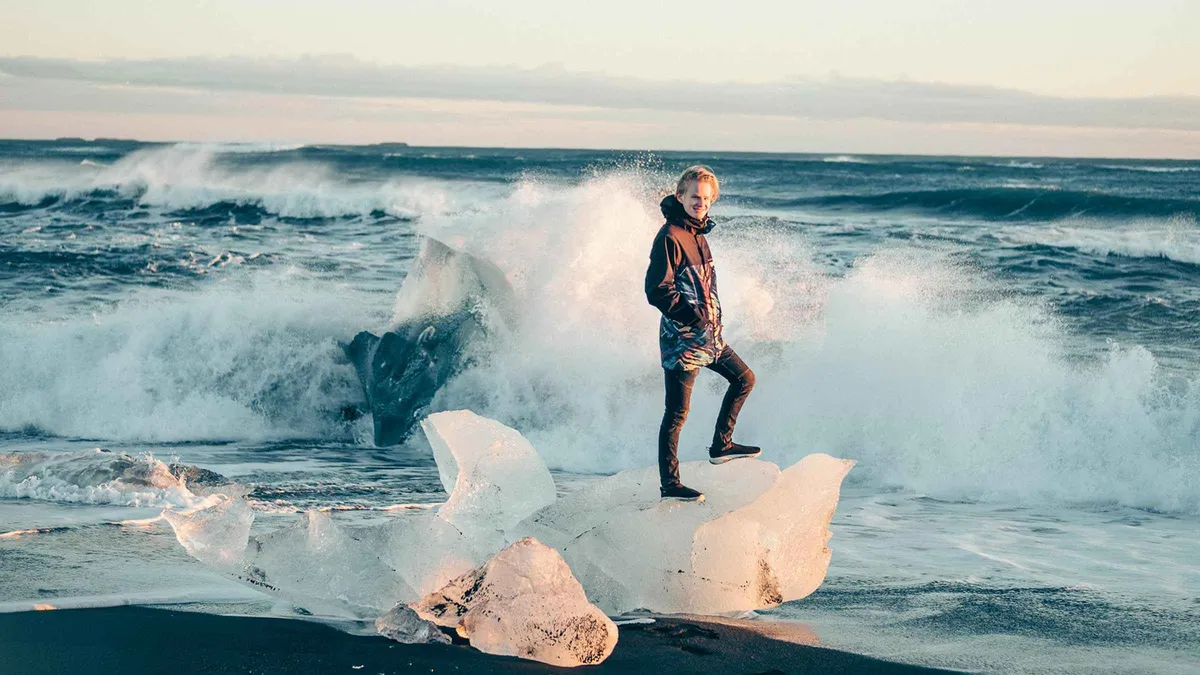 from $232.96Most booked
 Jökulsárlón Day Trip from Reykjavík with Diamond Beach
One long day covers the whole South Coast run: Seljalandsfoss, Skógafoss, the lagoon itself and the black sand of Diamond Beach, with hotel pickup in Reykjavík. No boat…
- Round-trip from Reykjavík
- Seljalandsfoss + Skógafoss stops
- Diamond Beach walk
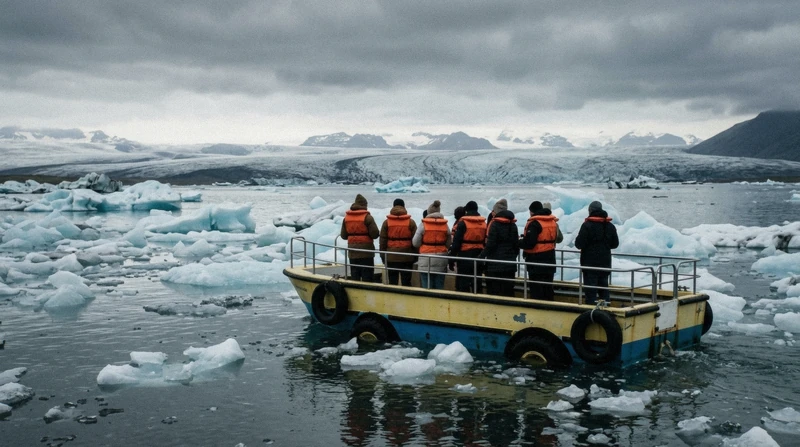 from $328Boat cruise included
 South Coast Day Tour with a 30-Minute Boat Cruise on the Lagoon
The one day tour on this page that puts you on the water: a 30-minute cruise among icebergs the guides estimate at 1,000 to 1,500 years old. Seljalandsfoss…
- 30-minute iceberg cruise
- Seljalandsfoss walk-behind waterfall
- Departs Reykjavík 07:30
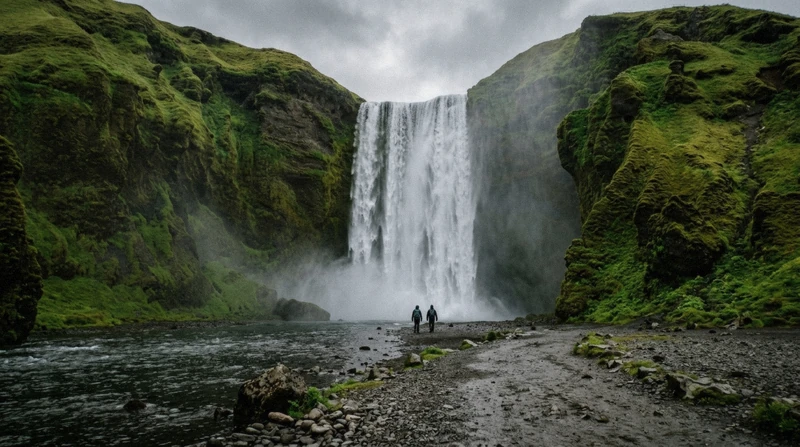 from $639Hotel night included
 2-Day South Coast Trip with Glacier Hike and Overnight Stay
Splits the 370 km drive over two days instead of one, with a hotel night, breakfast and a blue ice hike on Sólheimajökull. The lagoon boat ride is…
- One night's hotel + breakfast
- Guided blue ice hike
- Optional lagoon boat ride
What Diamond Beach Actually Is
Fellsfjara, and where the name came from
Icelanders call it Fellsfjara. Diamond Beach is a tourism name, and it stuck because on a clear morning the ice on black sand looks exactly like that.
The beach itself is unremarkable geology: ground basalt washed down by glacial rivers, the same black sand you find at Reynisfjara and Vík. What makes it different is 200 metres upstream, where a glacial lagoon empties into the Atlantic.
How the ice gets there
Bergs calve off the front of Breiðamerkurjökull into Jökulsárlón and drift for months, sometimes years, before the current takes them through the narrow outlet channel under the bridge.
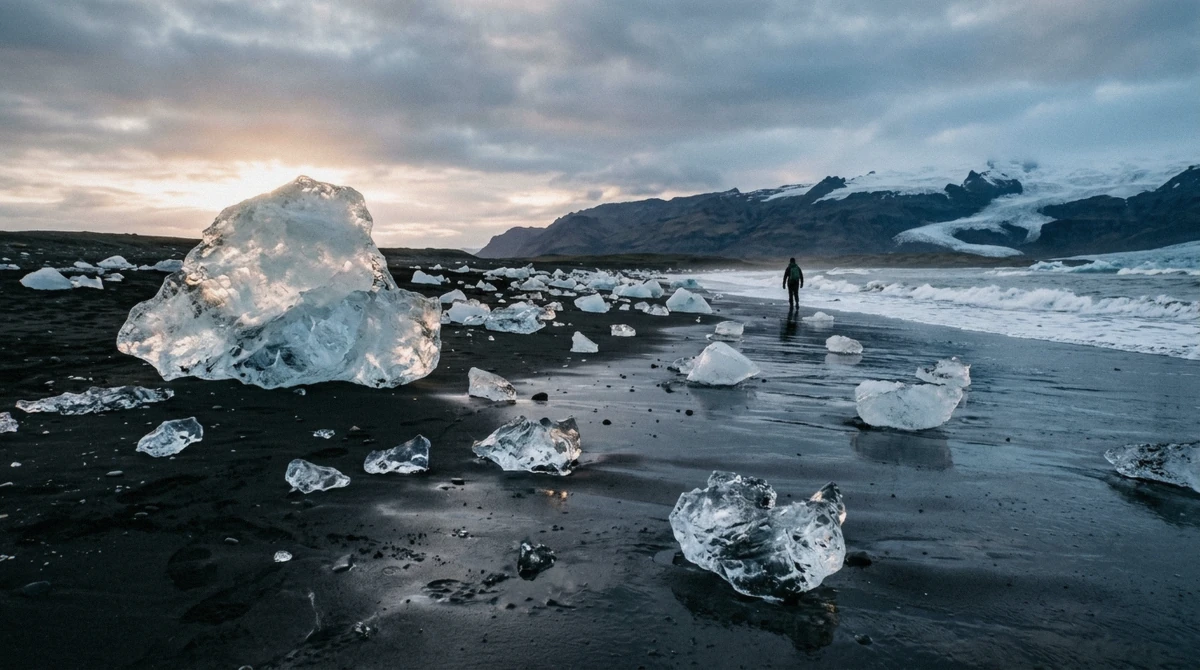
Once in the sea they are at the mercy of tide and surf, and what comes back is a fraction of what went out, tumbled smooth and thrown up onto the sand. Some pieces are the size of a fist, some the size of a car.
Why some ice is blue and some is black
Blue ice is old ice. Centuries under a few hundred metres of glacier squeeze the air bubbles out, and the dense ice that remains absorbs red light and returns blue.
White ice is younger and full of trapped air. The dark streaks and the almost black lumps are volcanic ash the glacier buried decades ago and has only now returned. On a bright morning with the sun low, backlit pieces genuinely glow.
When the Ice Is Actually There
The honest answer to the most common question
There is not always ice on Diamond Beach. Photographs that sold you the trip were taken in the right week under the right light, and plenty of summer visitors arrive to a stretch of black sand with a few melting lumps at the tide line.
What drives it is calving and weather. The glacier sheds more ice in the colder months, and it takes a particular combination of onshore wind and tide to push what escapes back up the beach.
- November to March: the reliable window, most ice and best light
- April and May: thinning, still usually something
- June to August: least ice, longest days, most people
- September and October: fewer visitors, ice starting to return
Time of day matters more than people expect
Low sun is what makes ice glow, so winter is generous: the sun stays low all day and the golden hours stretch. In midsummer the equivalent light comes around midnight and again at four in the morning, and the beach is empty at both.
Coach traffic peaks between 10:00 and 16:00. Since the beach never closes and parking runs until midnight, an early or late visit costs you nothing extra and changes the experience completely.
How long to give it
Thirty to forty-five minutes covers the walk and the photographs for most people. An hour if the ice is heavy and the light is doing something.
Day tours from Reykjavík usually allow about that much, which is a fair allocation on a 14-hour schedule. If you are staying nearby, come twice: once in daylight and once after dark in aurora season.
Ice on the Sand, Month by Month
Bars show how reliably visitors find substantial ice on the beach, out of 10, based on the calving season and reported conditions. Temperatures are average daytime highs at Höfn, 80 km east.
- 9/10 ice January 2°C
- 9/10 ice February 2°C
- 8/10 ice March 3°C
- 6/10 ice April 5°C
- 5/10 ice May 8°C
- 4/10 ice June 11°C
- 3/10 ice July 13°C
- 3/10 ice August 12°C
- 5/10 ice September 9°C
- 6/10 ice October 6°C
- 8/10 ice November 3°C
- 9/10 ice December 2°C
- Peak ice: November to March
- Shoulder: April, May, September, October
- Least ice: June to August
Ice on the sand depends on calving, wind and tide rather than the calendar alone, so treat this as odds and not a schedule. Temperatures in Celsius from Icelandic Met Office averages.
Getting There, Parking and What It Costs
Driving
Route 1 the whole way, 378 km from Reykjavík, about five hours without stops and closer to seven with the waterfalls everyone stops at. The turn is signposted on both sides of the bridge and you cannot miss the bridge itself.
In winter this road closes at short notice. Check road.is the night before and again in the morning, and treat a closure as the reason to sleep east of Vík rather than west of it.
- 378 km from Reykjavík on Route 1
- Two car parks, one either side of the bridge
- Eastern car park is the beach, western is the lagoon
- Parking ISK 1,000, valid until midnight, covers both
Without a car
Strætó bus route 51 links Reykjavík with Jökulsárlón on weekdays except Wednesdays in season, and it is the only public option. The timings suit almost nobody: you get either twenty minutes here or most of a day.
The realistic alternative is a day tour from Reykjavík at $232.96, or the version that adds a lagoon cruise at $328. Both cross the bridge and both stop on the sand.
What the visit costs
Nothing, beyond parking. There is no gate, no ticket and no season. The café, the toilets and the boat hut are on the lagoon side of the bridge, which is another argument for one parking ticket and both sides in a single visit.
Fuel is the cost people forget: the nearest pumps are at Freysnes 55 km west and Höfn 80 km east, and neither is somewhere to discover an empty tank in February.
| Item | Cost | Note |
|---|---|---|
| Beach access | Free | No gate, open at any hour |
| Parking | ISK 1,000 | About $8. Valid until midnight, covers the lagoon too |
| Toilets and café | Lagoon side | Across the bridge, 09:00–19:00 in summer |
| Nearest fuel | Freysnes or Höfn | 55 km west or 80 km east |
Seals, Orcas and the Birds
Seals are the reliable ones
Harbour and grey seals work the outlet channel where the current concentrates fish, and they come ashore on the ice on both sides of the bridge. Winter gives you numbers, summer gives you pups.
Walk toward the channel rather than along the surf line if seals are what you came for, and keep your distance: they are wild animals resting between fishing trips, not an exhibit.
Orcas, if you are lucky
Orcas follow herring along this coast in winter and are seen offshore from the beach, most often between December and February. Nobody should plan a trip around it.
Binoculars change the odds more than any amount of patience does. The same water brings porpoises and the occasional minke.
Birds
Arctic terns nest on the flats behind the beach from May to August and dive at anyone walking near a nest, so hold a hand above your head and keep moving. Great skuas patrol the same ground.
Eider, fulmars and glaucous gulls work the outlet all year, and the whole crowd is here for the fish riding in on the tide.
Photographing Diamond Beach
The light
Backlight is the whole trick: put the sun behind a clear piece of ice and it lights up from inside. That means shooting into the low sun in winter, or at midnight in June when the sun grazes the horizon and never properly sets.
Overcast days flatten everything and photograph poorly here, which is worth knowing before you build a morning around it.
Kit and settings
A wide lens for the ice-against-sky compositions and something longer for seals. A polariser cuts glare off wet sand and pulls detail out of the ice.
If you want the silk-water look under a piece of ice you need a tripod and a neutral density filter, plus the nerve to set up in the surf zone, which the safety notes on this page argue against.
- Wide lens for foreground ice, 200mm+ for seals
- Polariser for wet sand and glare
- Tripod and ND filter for long exposures, if the sea allows
- Lens cloth: spray and blowing sand are constant
- Spare battery; cold halves the life of the one in the camera
After dark
There is no light pollution here, so the beach is a genuine aurora location from September to March, with ice in the foreground that nowhere else can offer. Check the forecast at vedur.is before driving out.
Bring a torch and use it. Walking a beach strewn with ice blocks in the dark is exactly as clumsy as it sounds, and the sea is still there, still invisible.
The Sea Here Kills People
Sneaker waves
The Atlantic on this coast runs sets that reach far higher up the sand than the twenty waves before them, without warning. That is what a sneaker wave is, and it has killed visitors on beaches along this shore.
The rule that keeps you safe is boring and absolute: stay well back from the waterline, never turn your back on the sea, and never let a photograph move you closer than you would otherwise stand.
Never stand on the ice at the tide line
The larger pieces look solid and are not anchored to anything. A wave lifts them, they roll, and they weigh a great deal.
People have been knocked over and dragged by exactly this, and the water is around 5°C in winter, cold enough to cause hypothermia within minutes. There is no lifeguard and no phone signal to speak of.
- Stay well back from the waterline at all times
- Never climb or sit on ice near the water
- Never turn your back on the sea for a photograph
- Keep children within arm's reach on the sand
- The water is about 5°C in winter and above 10°C at best in summer
Underfoot and overhead
Wet black sand around melting ice is slippery, and in freezing weather the car park and the path get glazed. Crampons that slip over your boots cost little at any large petrol station and are the single most useful thing in a winter boot bag.
Wind is the other one. Gusts on this coast rip car doors off their hinges, which is not a figure of speech and is not covered by most rental insurance.
What Else Is Within Reach of the Bridge
The lagoon, two minutes away
Cross back over the bridge and you are at Jökulsárlón itself, where the same ice starts its journey. In summer the amphibian boat runs for 7,100 ISK and the Zodiac for 16,600 ISK; in winter neither operates and the shore walk is the whole offer.
One parking ticket covers both sides, which is the strongest practical argument for treating the beach and the lagoon as a single stop rather than two.
Fjallsárlón, ten kilometres west
A smaller lagoon with Zodiac tours from about 11,300 ISK and a maximum of ten people per boat. No beach, but the glacier wall is closer and the coaches mostly drive past.
Worth the detour if you have half an hour and want to see what Jökulsárlón looks like without the crowd.
Höfn, Skaftafell and Vestrahorn
Höfn is 80 km east, a working harbour town with the nearest supermarket and langoustine on most menus. Skaftafell is 60 km west, with the national park visitor centre and the Svartifoss trail.
Vestrahorn at Stokksnes, about 95 km east, is the sawtooth mountain over black dunes that fills photography feeds. It charges admission through the café at the gate, unlike everything else on this stretch.
What a full day here looks like
Morning on the ice with a glacier hike at $134.10 or an ice cave from $195, both meeting at the lagoon car park. Soup at the café. Then the beach in the last of the light.
That is one parking ticket, no repositioning, and the reason people who sleep nearby get so much more out of this stretch than the day-trippers do.
Diamond Beach in Each Season
Winter, November to March
The version everyone has seen. Heavy ice, sun that never climbs high, and light that stays usable most of the short day. Seals are at their most numerous and orcas are offshore.
The cost is the road: closures are routine, daylight runs roughly 11:00 to 16:00 in December, and the car park glazes over. This is when crampons over your boots earn their place in the bag.
Spring, April and May
Ice thins out but rarely disappears, days lengthen fast, and the coach traffic has not started. Arctic terns arrive in May and start defending nests behind the beach.
A good compromise if you want workable weather without July's queue at the café.
Summer, June to August
Least ice and most people. What summer gives instead is light: the sun barely sets, so midnight on the sand is both empty and beautifully lit, and the seals have pups.
Go in expecting a beach rather than a jewellery display, and treat any ice you find as a bonus.
Autumn, September and October
The underrated window. Ice starts returning, the aurora season opens, tour prices soften and the car park empties.
Daylight is still generous enough to drive down from Reykjavík and see something the same afternoon, which stops being true by late November.
Practical Answers People Look for on the Sand
Toilets, food and phone signal
Everything is on the lagoon side of the bridge: toilets, the café with soup and coffee, and a small shop. Summer hours are 09:00–19:00, dropping to 09:00–17:00 between December and February, and the café closes 24–26 December and 31 December–2 January.
Mobile signal is patchy on the sand and reliable in the car park. Download your map before you leave Vík rather than trusting a live one here.
Accessibility
The car park is paved and the view over the sand from its edge is close enough that the ice reads properly. The beach itself is soft black sand with ice blocks scattered across it, which rules out wheels and makes it hard going with a stick.
The lagoon side is the easier half for anyone with limited mobility: a paved path runs along the water, and the café has step-free access.
Drones
Vatnajökull National Park restricts drone flying, and the area around the lagoon and the beach falls under park rules that change with the season and with bird nesting.
Check the park's own guidance before you pack one. Arctic terns nesting behind the beach between May and August are protected, and flying near them is both illegal and a fast way to lose a drone.
What people wish they had brought
Waterproof boots, because wet black sand around melting ice soaks trainers in minutes. Gloves, in every month. A torch if there is any chance of staying past dusk.
And a bin bag for the wet, sandy things afterwards, which is the tip nobody writes down and everybody needs on the drive back.
- Waterproof boots, not trainers
- Gloves and a hat, even in July
- Torch for the aurora hours
- Lens cloth and a spare battery
- Something to put wet sandy kit in
Last verified
Parking fees, café hours and boat prices on this page were checked on 5 August 2026 against the lagoon operator's own listings, with Icelandic króna converted at 122.73 to the dollar.
Seasonal hours and road conditions move without notice. Vegagerdin publishes live road status at road.is, and the aurora forecast sits at vedur.is.
Where Diamond Beach Is
Seaward side of the Ring Road bridge at Jökulsárlón, between Skaftafell and Höfn.
Diamond Beach Questions
Is Diamond Beach in Iceland worth it?
Yes, if you are already at Jökulsárlón, and it is two minutes across the bridge. Ice on black sand under low sun is one of the few Iceland sights that outperforms its photographs. It is not worth a 378 km drive on its own, particularly in July when there may be almost no ice, which is why it works best paired with the lagoon and a tour.
How much does it cost to go to Diamond Beach?
The beach is free and open at any hour. Parking costs ISK 1,000, about $8, and that ticket is valid until midnight and covers the lagoon car park across the bridge as well. There is no entrance fee and no ticket office.
Is there always ice on Diamond Beach?
No. Ice arrives when bergs escape the lagoon through the outlet channel and the surf throws them back ashore, so it depends on calving, wind and tide. November to March is the reliable window. Summer visits sometimes find little more than a few melting lumps at the tide line.
How do I get to Diamond Beach in Iceland?
Drive Route 1 east from Reykjavík, 378 km and about five hours without stops, and park on the seaward side of the bridge at Jökulsárlón. Without a car, a day tour at $232.96 is the practical option; Strætó bus 51 runs on weekdays except Wednesdays in season but its timings suit almost nobody.
When is the best time to visit Diamond Beach?
November to March for ice and low light. Within the day, before 10:00 or after 16:00, since coaches fill the car park between those hours and the beach never closes. In midsummer the best light is around midnight.
Can you see the northern lights at Diamond Beach?
Yes, from about September to March, and the absence of light pollution makes it one of the better spots on the South Coast, with ice in the foreground. Check the aurora forecast at vedur.is, bring a torch, and remember the ice blocks are trip hazards in the dark.
Why is the sand black?
It is ground basalt. Iceland's bedrock is volcanic, glacial rivers grind it down and carry it to the coast, and the result is the black sand you see here, at Reynisfjara and on beaches all along the south.
Can you swim at Diamond Beach?
No. The Atlantic here sits around 5°C in winter and rarely passes 10°C in summer, cold enough to cause hypothermia within minutes, and the sneaker waves and undertow on this coast have killed people. Stay well back from the waterline.
How long should I spend at Diamond Beach?
Thirty to forty-five minutes for the walk and photographs, an hour if the ice is heavy. Day tours allocate about that. If you are sleeping nearby, come twice: once in daylight and once after dark in aurora season.
Where should I stay near Diamond Beach?
Hali Country Hotel is 12 km east from about $246 a night and Fosshotel Glacier Lagoon in Hof is 29 km west from about $172. Both are booked months ahead for June to August. The full list is in where to stay.